
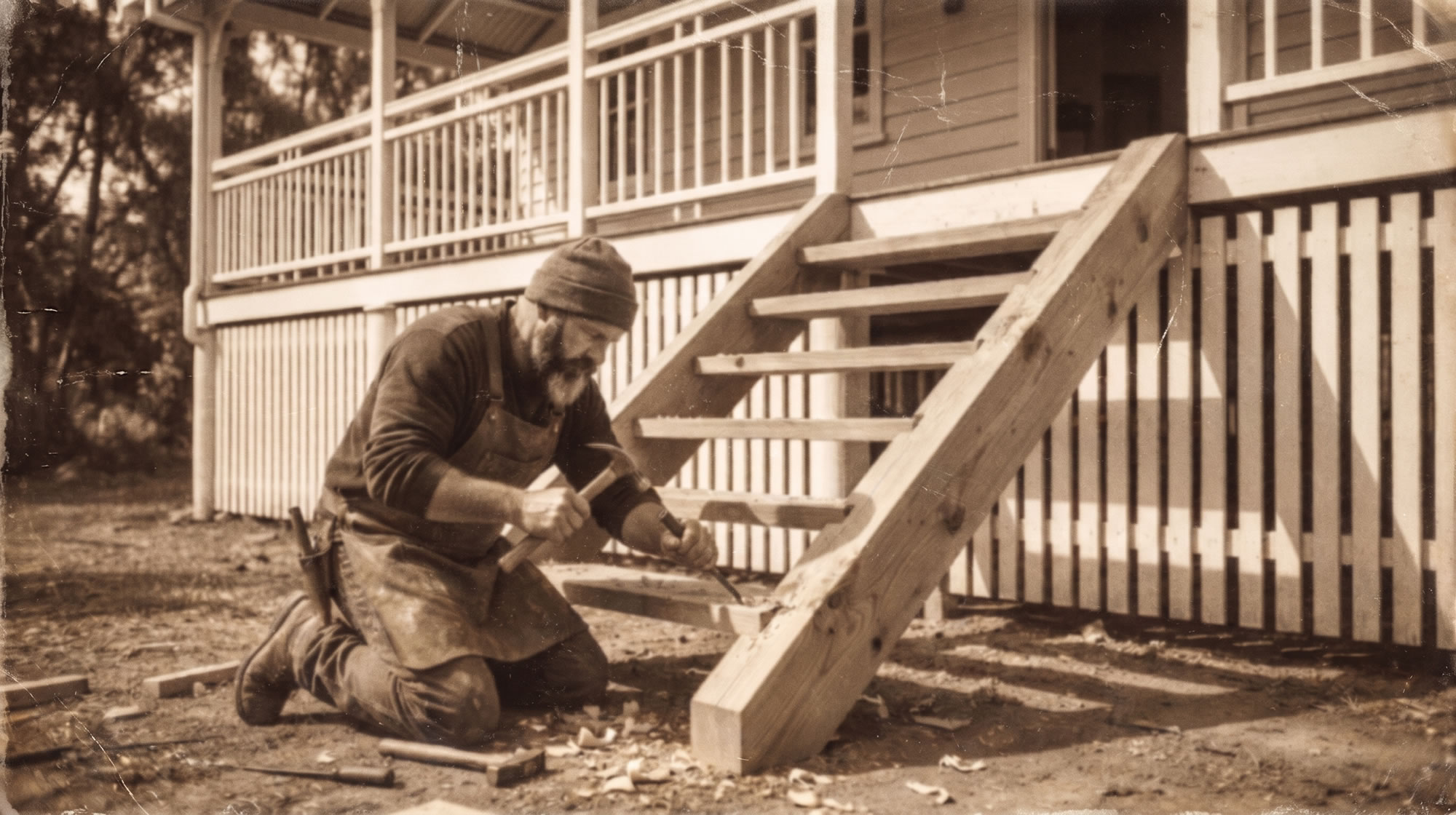
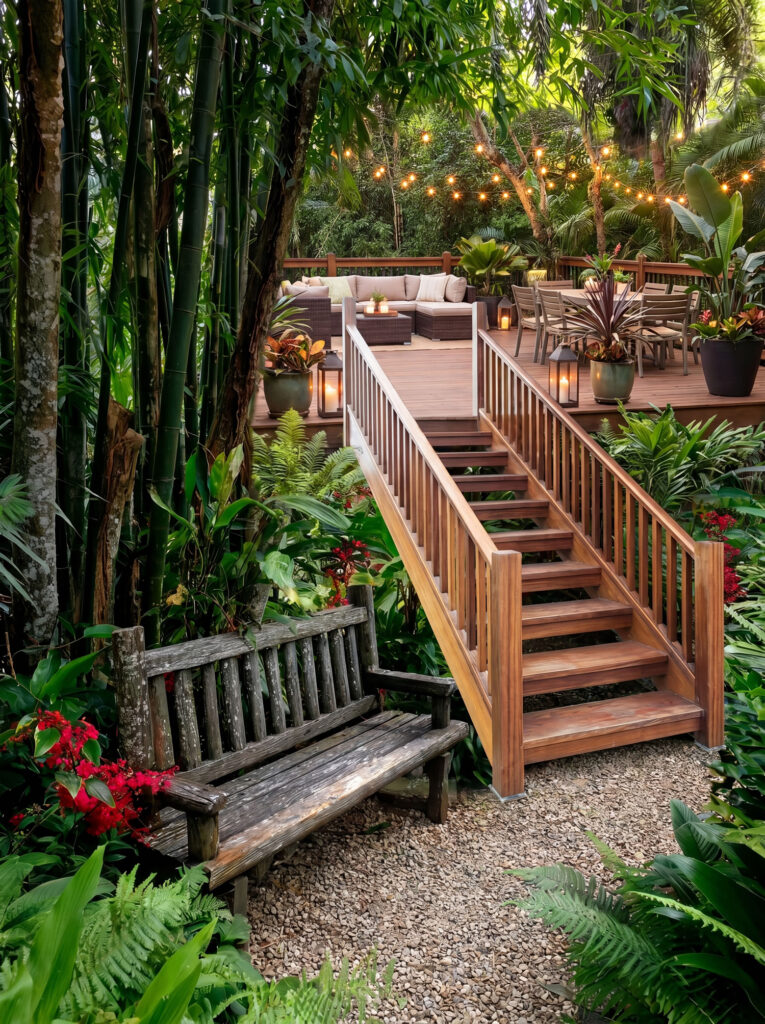
External timber stairs are a defining feature of South East Queensland homes, seamlessly connecting elevated living spaces to the landscape below. We see them not merely as functional access points, but as structural and aesthetic assets that influence property value, usability, and long-term durability. In a region shaped by subtropical conditions, intense UV exposure, seasonal rainfall, and humidity, timber stairs must be designed and constructed with precision to ensure both resilience and return on investment.
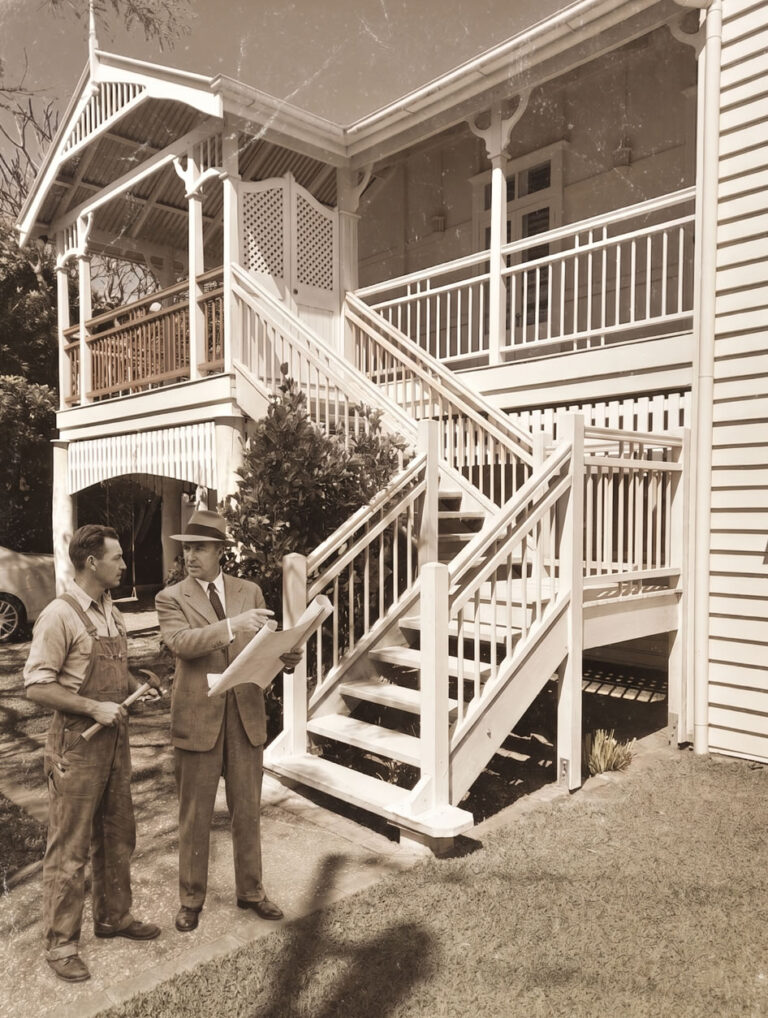
The origins of external timber stairs in Queensland trace back to the classic Queenslander home. Elevated on stumps to promote airflow and mitigate flood risk, these homes required practical access solutions. Timber, readily available and easy to work with, became the material of choice. Early staircases were simple, steep, and functional, often featuring minimal balustrading and exposed structural members.
As craftsmanship evolved, so too did the detailing of external stairs. Colonial and federation-era homes introduced turned balusters, ornate handrails, and integrated landings. External staircases became a visual extension of verandahs and façades, reflecting status and architectural sophistication.
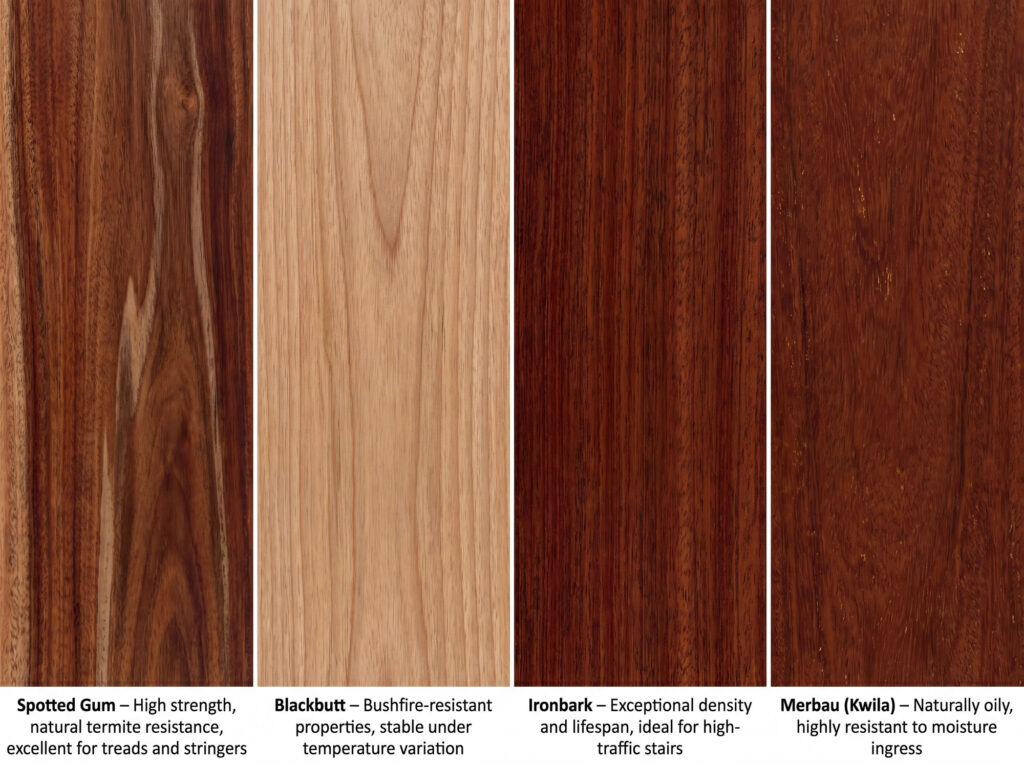
We prioritise dense Australian hardwoods for external stair construction due to their superior durability and resistance to decay. Proven species include:
Spotted Gum – High strength, natural termite resistance, excellent for treads and stringers
Blackbutt – Bushfire-resistant properties, stable under temperature variation
Ironbark – Exceptional density and lifespan, ideal for high-traffic stairs
Merbau (Kwila) – Naturally oily, highly resistant to moisture ingress
While hardwood remains premium, treated pine (H3/H4 rating) offers a viable option for budget-conscious builds. Proper sealing and maintenance are critical to maximise lifespan.
We ensure all timber is selected based on exposure classification, with treatments aligned to ground contact, weather exposure, and termite risk. In South East Queensland, this is non-negotiable.
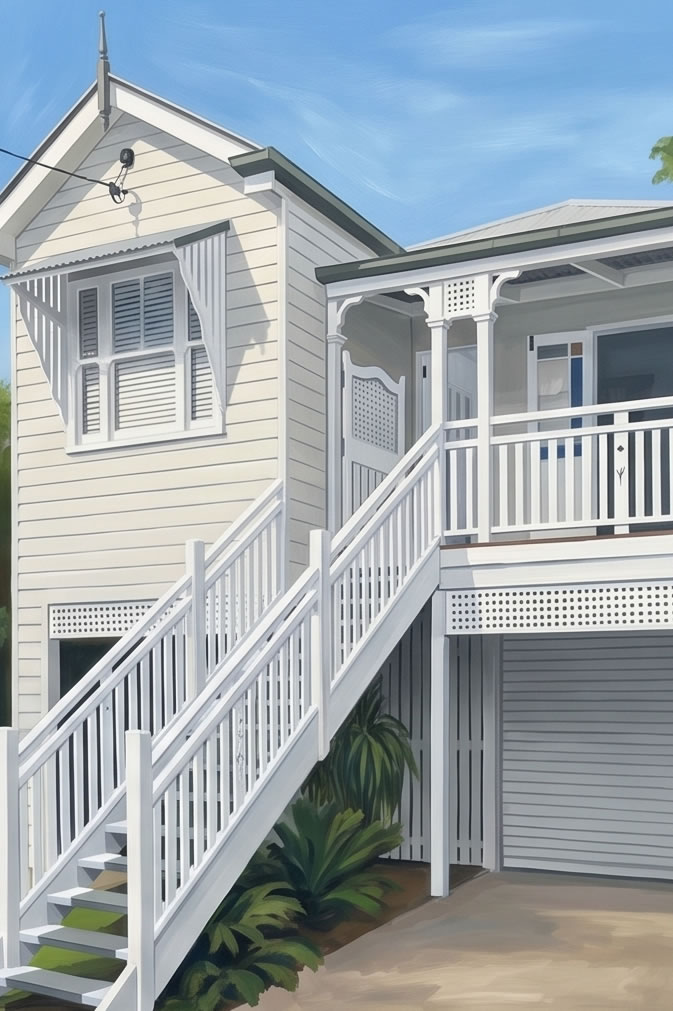
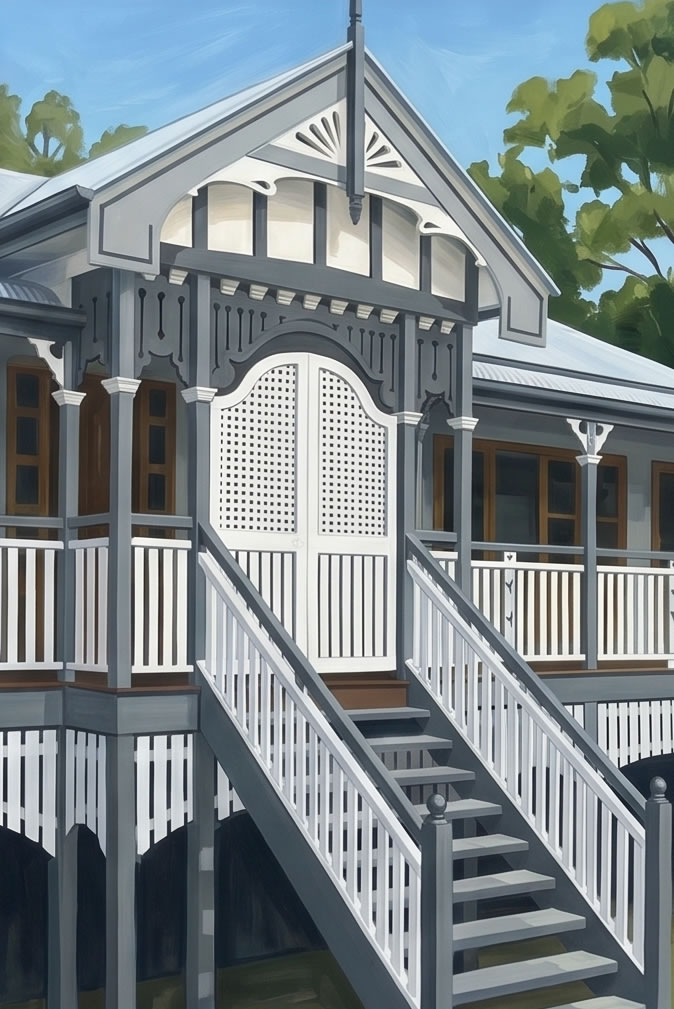
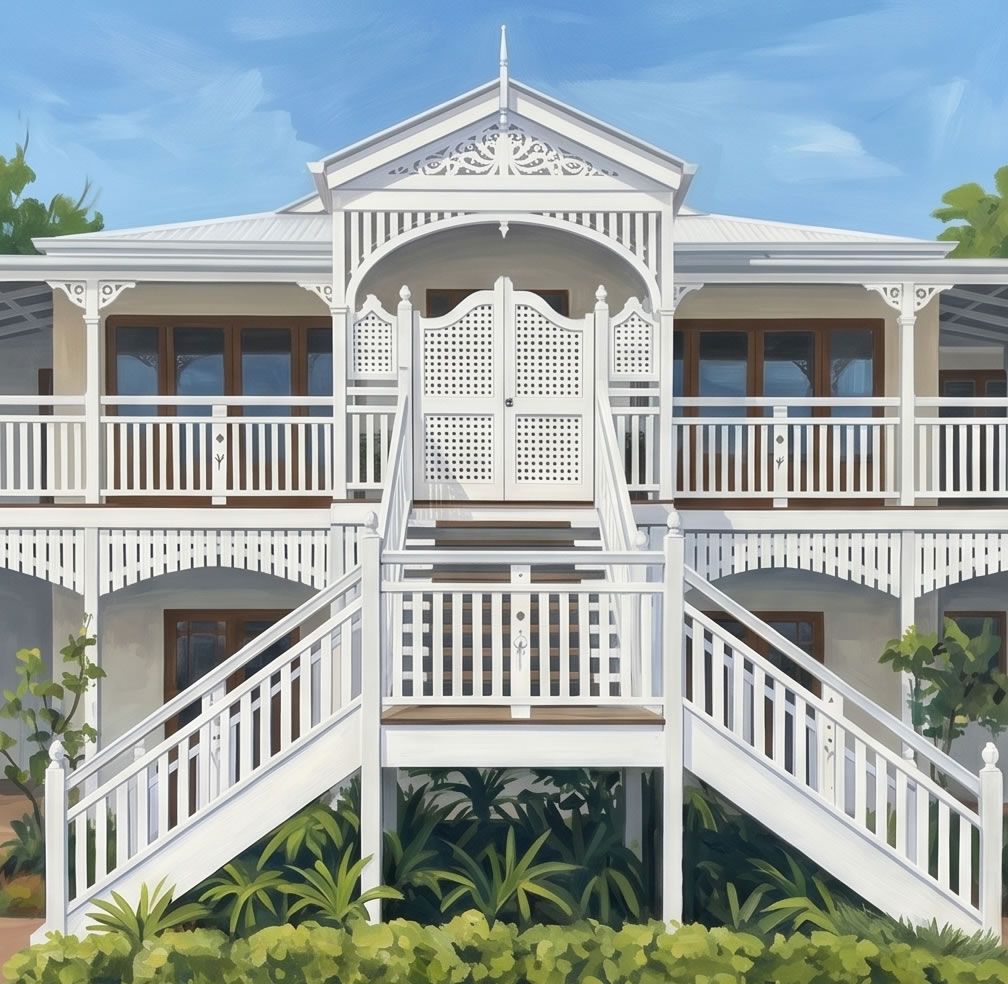
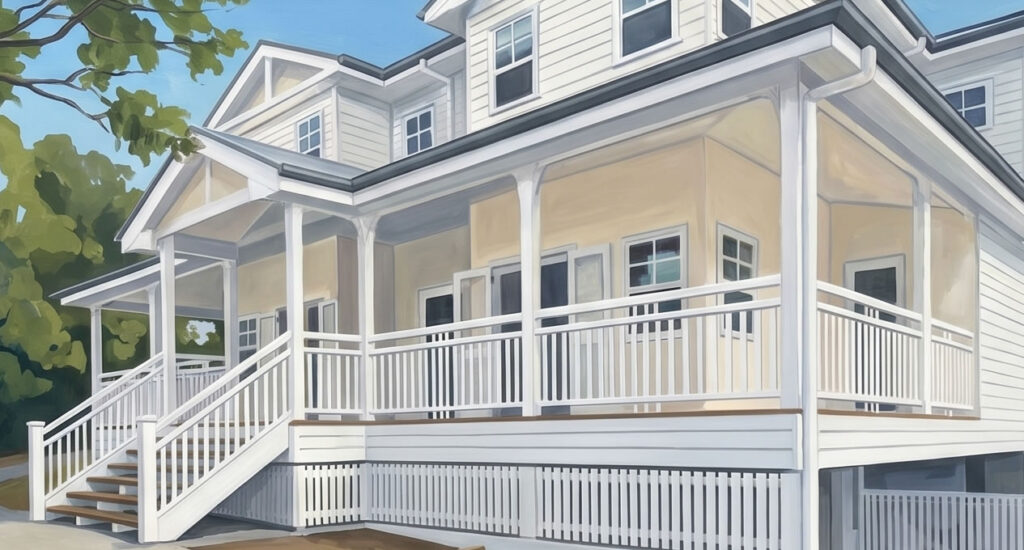
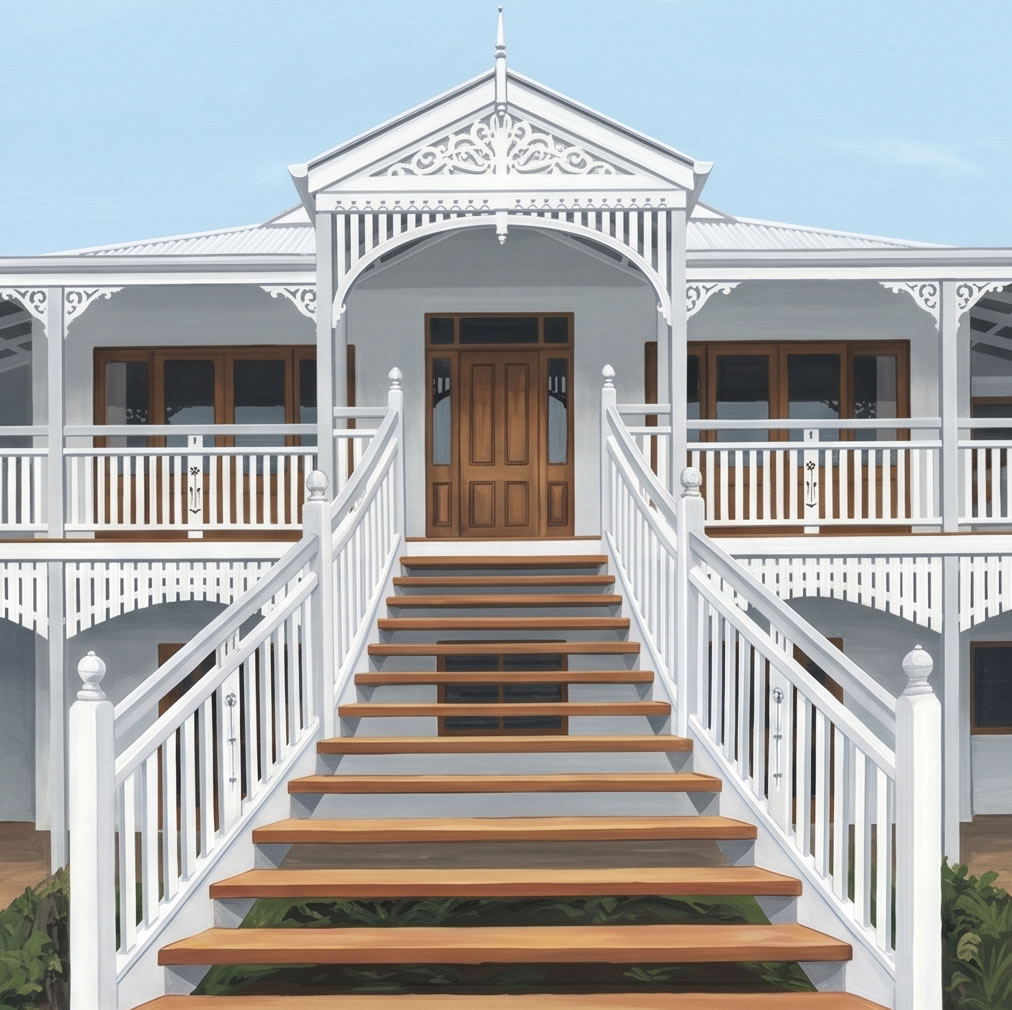
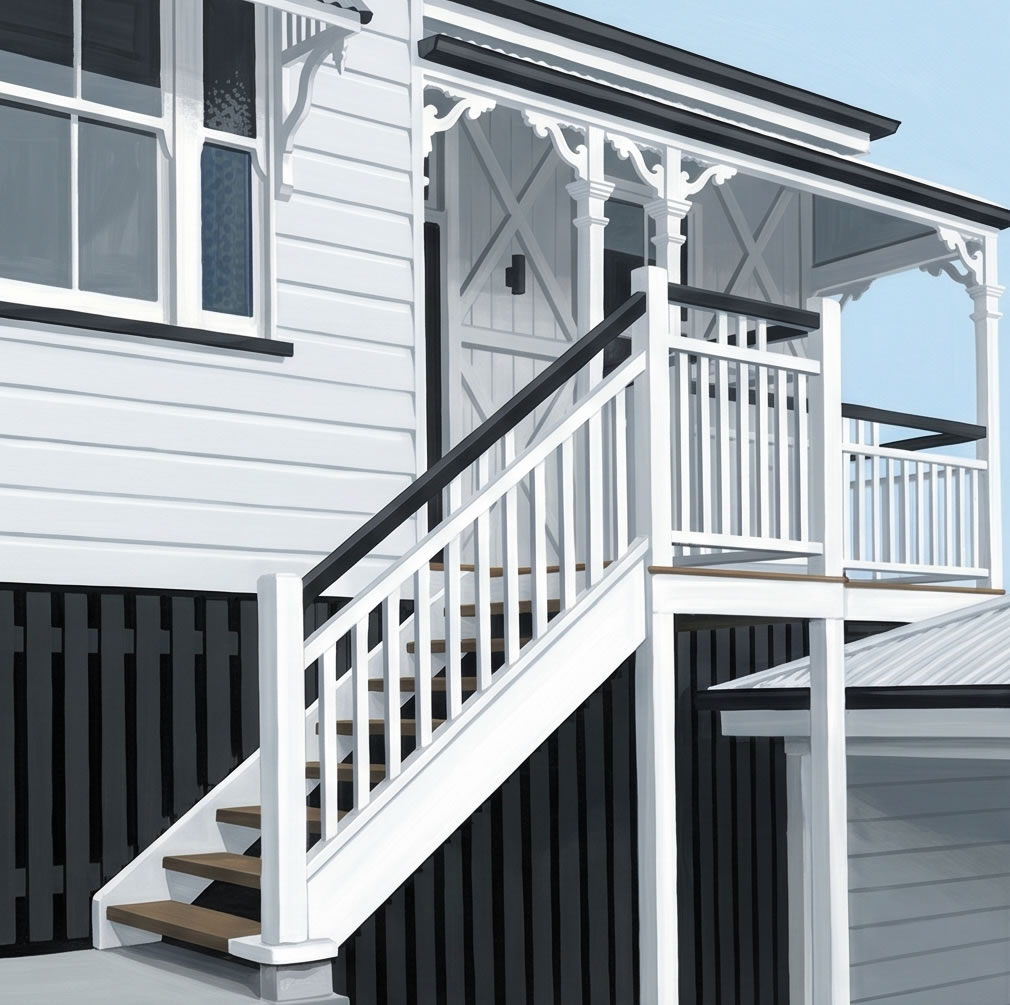
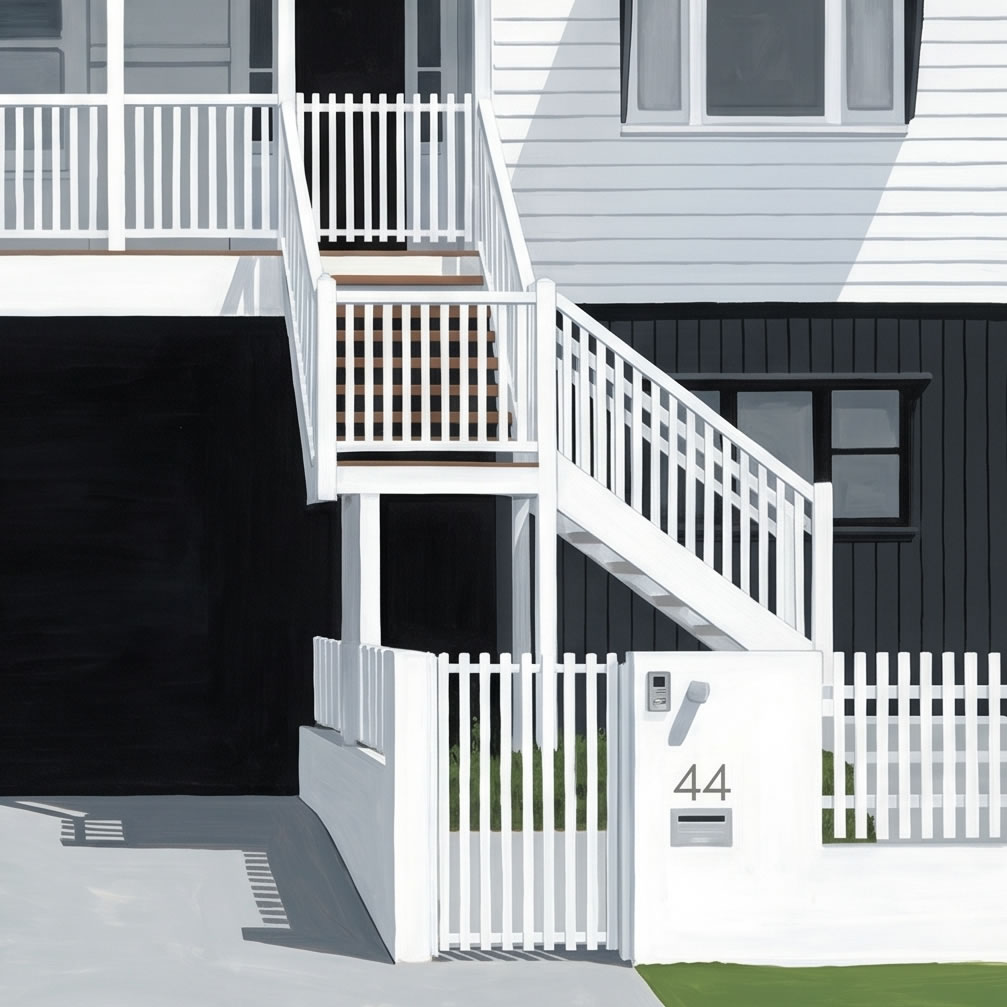
Landings are no longer optional, they enhance safety, improve traffic flow, and create opportunities for visual balance. In sloped sites, multi-landing staircases reduce the gradient and improve usability.
Modern balustrades must meet strict height and spacing regulations while contributing to the overall design. Popular solutions include:

We begin with engineered footings designed to withstand soil movement and moisture variation. Concrete pads or piers are standard, ensuring load distribution and long-term stability.
Stringers are the backbone of any staircase. At All Stairs and Balustrades we:
We apply high-performance oils or sealants designed for UV resistance and moisture protection. Regular maintenance cycles are established at handover to preserve appearance and structural integrity.

All external timber stairs must comply with Australian Standards and local building codes. Key requirements include:
We incorporate compliance from design stage to eliminate costly retrofits.
We recommend bi-annual inspections to identify:
Cleaning removes organic buildup that accelerates decay.
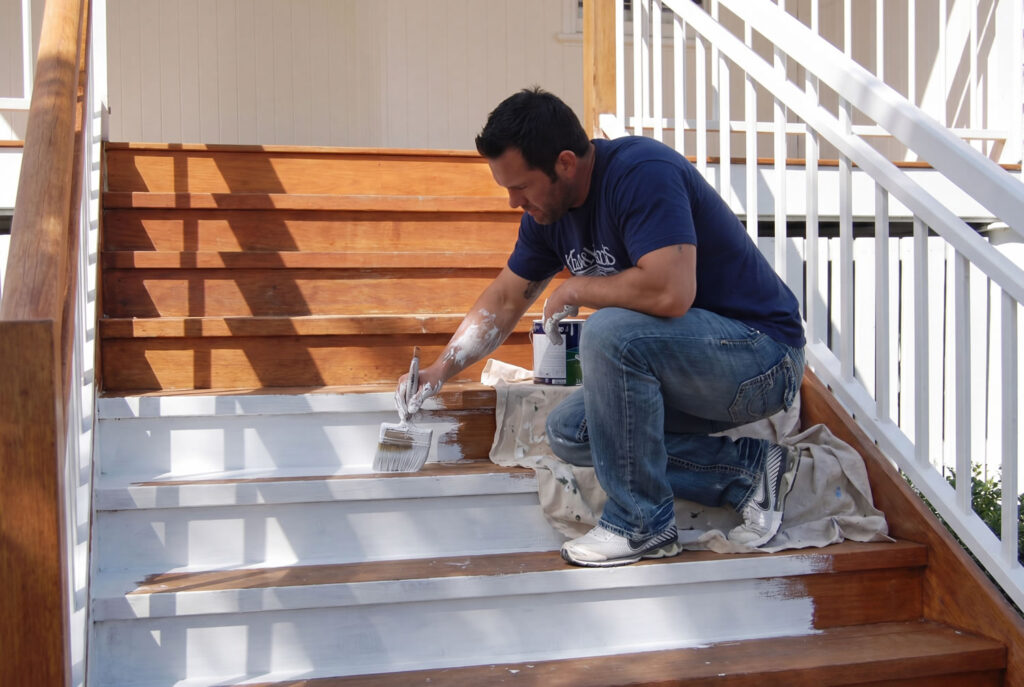
External timber stairs require re-oiling or sealing every 12–24 months depending on exposure. This preserves colour, prevents moisture ingress, and extends lifespan.
Early intervention allows for selective replacement of treads or balustrade elements, avoiding full structural rebuilds.
Well-constructed external stairs improve street appeal and perceived quality. In elevated Queensland homes, they are often the first point of interaction, impacting buyer perception immediately.
Premium materials and correct construction techniques significantly extend service life. A properly built hardwood staircase can exceed 25 to 40 years with maintenance.
Safe, comfortable access enhances daily living, particularly in multi-level homes or properties with outdoor entertaining areas.
Non-compliant stairs present liability risks. Professionally constructed systems protect owners from legal and insurance complications.
We are seeing increased demand for:
These approaches balance environmental responsibility with performance.
External timber stairs in South East Queensland demand a synthesis of heritage understanding, modern engineering, and disciplined construction. When executed correctly, they deliver decades of performance, elevate property value, and enhance everyday usability. At All Stairs and Balustrades we approach every project with a focus on durability, compliance, and design integrity, ensuring each staircase is not just built, but built to last.